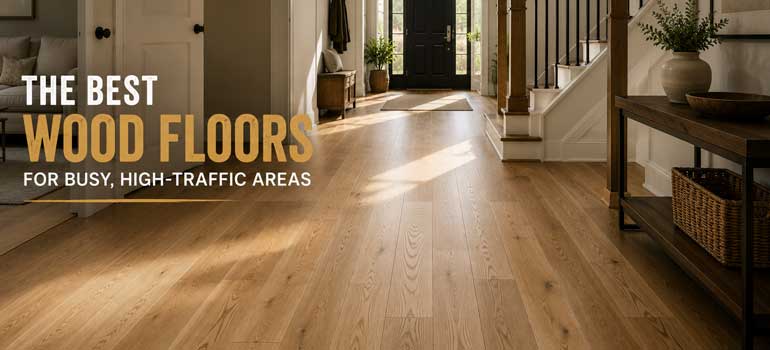
Wood flooring is genuinely durable, but not every wood floor is equally suited to a hallway, a family kitchen or a commercial space with constant footfall. Getting the species, construction and finish right up front matters far more in a busy area than it does in a spare room that barely gets used. Here's what actually holds up, and what doesn't.
What counts as a "busy" area, exactly?
Traffic isn't just one thing, and the distinction matters for how you plan around it.
- High footfall refers to the sheer number of people crossing a floor over time, whether that's a busy household or a commercial space with constant visitors. The more people, the more wear accumulates on the finish.
- Heavy footfall refers to the nature of that traffic rather than the volume: heavy-soled shoes, dragged furniture or equipment, and grit tracked in from outside. Hallways, stairs and entrance areas typically see this even in an otherwise quiet home.
- Most real busy areas involve both, which is exactly why hallways, kitchens and commercial floors need more careful planning than a bedroom does.
Which wood species actually hold up best
Hardness is the real driver here, measured on the Janka scale, and it's worth choosing deliberately rather than picking on looks alone.
- Oak remains the standard recommendation for busy UK homes, combining strong hardness with wide availability
- Maple is genuinely one of the hardest domestic species and a common choice for spaces that take repeated impact
- Ash sits close to oak on hardness and brings a lighter tone if that suits the space better
- Softer species like walnut and cherry aren't ruled out, but they show dents and scratches more readily under heavy daily use
Our guide to ash, cherry, walnut, maple and oak flooring covers how these compare in more detail, and our oak vs walnut guide goes further into that specific comparison if hardness is your main concern.
Solid or engineered wood for a busy space?
Engineered wood is generally the safer choice for the busiest areas, particularly anywhere near an entrance or in a kitchen.
- More resistant to humidity and temperature swings, which matter more in high-traffic spots that see doors opening and closing constantly
- Dimensionally stable under a patterned layout, if you're considering herringbone or chevron for a hallway specifically
- Solid wood still works well in busier rooms with more stable conditions, it's really the combination of heavy traffic and humidity swings that tips the decision toward engineered construction
Finish choice matters as much as species
This is where the original advice on maintenance frequency often gets overstated. A quality polyurethane or lacquer finish typically lasts several years before it needs recoating, not twice a year, even in a genuinely busy room.
- Lacquer generally offers the longest intervals between maintenance, which is part of why it's often recommended for the busiest spaces
- Oil finishes need more frequent attention, typically every one to three years depending on traffic, though they're easier to spot-repair in between
- Checking the finish's condition periodically matters more than working to a fixed calendar, since two similarly busy rooms can wear at different rates
Our guide to oiled or lacquered floor finishes covers this comparison in full if you're deciding between the two for a high-traffic room.
A few habits that genuinely extend a busy floor's life
- Doormats at every entrance catch the grit that actually causes most scratching, more effectively than any finish choice alone
- Felt pads under furniture prevent dents and drag marks in areas where furniture gets moved regularly
- Proper acclimatisation and subfloor preparation before fitting reduce the risk of long-term issues far more than anything done after installation
- Addressing spills and scuffs promptly, rather than letting them sit, keeps minor issues from becoming bigger ones
Our guide to the main parquet flooring issues covers what to watch for if a busy floor starts showing more serious wear.
If you're planning flooring for a genuinely high-traffic space, our parquet floor fitting team can recommend the right species, construction and finish for your specific room. We also handle commercial parquet floor fitting for offices, restaurants and retail spaces facing constant footfall. Get in touch for a free quote whenever you're ready.
Frequently asked questions
Is a more expensive wood floor always more durable? Not necessarily. Price often reflects species rarity, finish type or pattern complexity rather than durability specifically, so it's worth checking the actual Janka hardness and construction rather than assuming cost alone signals how well a floor will hold up.
What's the single most important factor for a busy floor: species, construction or finish? They all matter, but finish is what takes the daily impact first, so a hard species with a weak or poorly maintained finish can still wear badly. Getting all three right together gives the best result rather than over-prioritising one.
Is carpet or vinyl ever more practical than wood for a truly high-traffic commercial space? It depends on the specific use case, but wood's ability to be sanded and refinished rather than replaced often makes it more cost-effective over a longer period, even in demanding commercial settings. It's worth discussing your specific footfall levels with a flooring professional before deciding.
Does a patterned floor like herringbone wear differently to a straight-laid one in a busy area? The pattern itself doesn't change durability, which comes down to species, construction and finish. It's worth using engineered wood for a patterned floor in a busy area specifically, since it holds precise alignment better than solid wood through daily humidity changes.
How can I tell if my current floor's finish needs attention before it looks obviously worn? Water no longer beading on the surface, a duller or patchier appearance, and more visible scratches in high-traffic paths are all early signs worth acting on before the bare wood becomes exposed underneath.