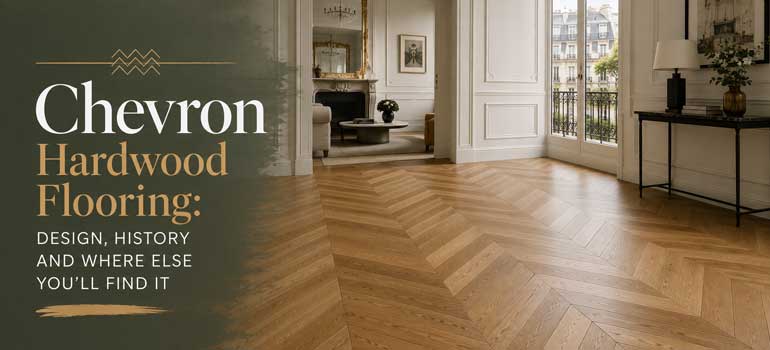
Chevron has stayed one of the most requested flooring patterns for a genuine reason: its continuous, unbroken "V" reads as sharp and deliberate in a way few other layouts manage. It's worth understanding what actually sets it apart, both from herringbone specifically and from other design choices generally, before deciding whether it's the right fit for your project.
What makes chevron different from herringbone
The two get confused constantly, and the distinction comes down to how each board is cut. Herringbone uses square-cut ends, creating a staggered zigzag. Chevron pieces are mitred at an angle, classically 45 degrees, so they meet edge to edge and form one continuous line rather than a broken one. Our dedicated guide to why we love chevron patterned parquetry goes further into construction, cost and styling if you want the fuller picture.
Why chevron works so well as a design choice
A few genuine advantages explain chevron's staying power:
- It brings a sophisticated, professional look that suits both domestic interiors and commercial spaces equally well, which is part of why it turns up as often in offices and hospitality settings as it does in homes
- Its neutral base tones keep it versatile. Because the wood species itself stays in the same natural colour range regardless of pattern, chevron leaves plenty of room for the rest of a room's décor and styling without the floor becoming overwhelming
- Pattern direction genuinely affects how a room reads. Laid diagonally across a space, chevron can help a narrower room feel wider, though it's worth being clear that this comes down to the direction it's laid rather than being an automatic property of the pattern itself, and the same is true of most parquet layouts, not chevron uniquely
- Its consistent, regular geometry gives a room a strong visual anchor, a dependable base that a wide range of furniture and décor styles can be layered on top of confidently
Chevron beyond hardwood
One thing that's easy to overlook: chevron isn't exclusively a wood flooring pattern. The same "V" layout is produced across several other materials, which is worth knowing if hardwood isn't quite right for a specific room or budget.
| Material | Where chevron in this material typically works well |
|---|---|
| Solid or engineered hardwood | Living rooms, hallways, bedrooms, most general interior use |
| Tile | Bathrooms, kitchens, and other wet or high-moisture areas |
| Luxury vinyl | Budget-conscious projects, rental properties, or rooms needing extra water resistance |
| Laminate | Cost-sensitive renovations where the genuine wood surface matters less than the look |
Choosing the material rather than the pattern is really the first decision, since chevron itself translates cleanly across all of them once you've settled on what the specific room needs.
A brief, corrected history
Chevron's origins as a flooring pattern trace back to 16th-century France, not the 17th century as it's sometimes described, arriving as a lighter, more practical alternative to the marble floors common in grand homes at the time, which were difficult to maintain and damaging to the joists beneath them. The pattern became firmly associated with the grand interiors of the following centuries, and its popularity broadened considerably through the 1800s as it moved beyond aristocratic homes into wider use across French interiors. That trajectory, from an aristocratic luxury to something far more widely accessible, mirrors how the pattern sits today: still capable of a genuinely formal, elevated look, but no longer reserved for anyone in particular.
If chevron sounds like the right choice for your project, whichever material you're considering, our parquet floor fitting team can talk through pattern scale, species and finish for your specific room. Get in touch for a free quote whenever you're ready.
Frequently asked questions
Is chevron more expensive in every material, or just hardwood? The cost premium over a simpler pattern like straight-laid or brick bond tends to hold across materials, since the mitred cuts and precise fitting chevron demands add labour regardless of what it's made from. The overall price still varies enormously by material choice itself, tile and vinyl generally costing less than solid hardwood.
Can chevron tile and chevron hardwood be used in adjoining rooms for a consistent look? Yes, and it's a common way to carry the same pattern from a wet room like a bathroom or kitchen into an adjoining living space without using wood somewhere it isn't suited. Keeping the tone similar between the two materials helps the transition read as intentional.
Does chevron suit a period property, or is it a more modern look? Both, genuinely. Its centuries-long history gives it a natural fit in traditional and period interiors, while its clean, graphic lines read as sharp and contemporary in a modern space, which is exactly why it's stayed popular across such different design eras.
Is laminate chevron as durable as real wood chevron? Not in the same way, since laminate can't be sanded and refinished the way solid or engineered wood can. It's a reasonable choice for a lower budget or a shorter-term project, but it doesn't offer the same decades-long lifespan that real wood chevron flooring can, provided it's properly maintained.
Does the diagonal-widening effect work with any chevron scale? It's more noticeable with a larger-scale chevron than a very fine, small pattern, since bigger boards create a more pronounced diagonal line for the eye to follow. It's worth seeing samples at actual scale in the room before deciding, since photographs don't always convey this effect accurately.