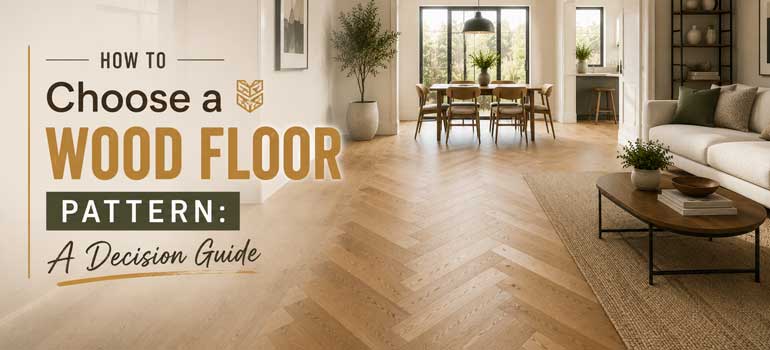
Most pattern guides list out herringbone, chevron, basketweave and the rest and leave you to figure out which one's actually right for your project. This one works the other way round: five practical questions that narrow the choice down, based on your budget, your subfloor, your room and your style, rather than just your first reaction to a photo.
Question one: what's your realistic budget?
Cost varies more between patterns than people expect, and it's worth ruling options in or out here first.
- Brick bond is the most affordable geometric pattern, since its regular, uncomplicated cuts produce the least waste
- Herringbone sits in the middle, more involved than brick bond but considerably more accessible than it used to be thanks to pre-cut engineered panels
- Chevron typically costs more than herringbone, since its mitred angled cuts waste more material and demand more precision to fit
- Versailles and fully bespoke basketweave sit at the top of the range, given the complexity of the panels or interlocking blocks involved
If budget is the deciding factor, that alone can narrow five options down to two or three worth actually comparing.
Question two: what condition is your subfloor in?
This matters more than most people realise before starting a pattern project.
- An uneven or non-original subfloor points toward engineered wood over solid, since it handles minor imperfections better and can sometimes go over an existing floor
- A concrete subfloor rules out nailing as a fitting method regardless of pattern, so gluing becomes the default
- Underfloor heating means engineered wood specifically, fitted with the glue-down method, whichever pattern you land on
Getting this assessed before falling in love with a specific pattern avoids the disappointment of discovering your subfloor doesn't suit the fitting method a particular look requires.
Question three: how big is the room, and which direction will it run?
This is where most pattern advice oversimplifies things. Room size alone doesn't rule a pattern in or out; direction and scale do the real work.
- Herringbone or chevron laid lengthwise down a room emphasises depth, which suits narrow spaces like hallways well
- A smaller block or plank size tends to suit compact rooms better than a large, bold one, regardless of which pattern you choose
- Brick bond and basketweave are naturally calmer and less directional, which is part of why they're often suggested for smaller spaces specifically
- Versailles genuinely does need scale to avoid feeling overwhelming, more than the other patterns on this list
Question four: what's your interior style?
Pattern and style don't have a strict rulebook, but a few pairings tend to work more naturally than others.
- Traditional and period interiors suit herringbone, chevron or Versailles, all of which carry genuine historical weight
- Modern and minimalist spaces often suit herringbone or brick bond, where clean geometric lines contrast well against simple furniture
- Rustic or industrial interiors lean toward brick bond or a calmer basketweave, avoiding anything too formal or ornate
Question five: are you fitting this yourself, or hiring a professional?
Be honest here, since it affects which patterns are realistic options.
- None of these patterns are genuinely beginner-friendly DIY projects, since all of them demand more precision than a straight-laid floor
- Brick bond is the most forgiving of the group if you're determined to attempt it yourself
- Herringbone, chevron, basketweave and Versailles all benefit significantly from an experienced fitter, since a small early misalignment compounds visibly across the room
Putting it together
Once you've worked through these five questions, you'll usually find two or three patterns genuinely fit your situation rather than one obvious winner. From there, our guides to the herringbone wood floor pattern, chevron patterned parquetry and basketweave parquet go into the detail on construction and styling for each.
If you'd rather talk it through than work it out alone, our parquet floor fitting team can assess your subfloor and room in person and recommend what genuinely fits. Get in touch for a free quote whenever you're ready.
Frequently asked questions
What if two patterns tick all five boxes equally well? At that point it genuinely comes down to personal preference, since there's no wrong answer between two options that both suit your budget, subfloor, room and style. Seeing physical samples in the actual room usually settles it faster than photos online.
Should budget or style take priority if they conflict? Budget is worth treating as a hard constraint first, since it's the easiest question to answer definitively. Once you know what's actually affordable, style becomes a matter of choosing the best-looking option within that set rather than an open-ended decision.
Does the answer change for a commercial space versus a home? The same five questions apply, though commercial spaces often weigh durability and installation downtime more heavily than a home would. Our guide to durable wood floors with patterns covers how pattern choice interacts with durability in more detail.
Can I change my mind on pattern after the subfloor's already been assessed? Usually yes, provided the new pattern is compatible with the same fitting method the subfloor assessment recommended. It's worth confirming with your fitter before ordering materials, since switching between solid and engineered construction partway through can affect timelines.
Is it worth paying more for a pattern I'm not fully sure about? Not usually. If a pattern only makes it through some of these five questions, it's often a sign to look at the next option down rather than stretch the budget or subfloor to accommodate a look you're not certain will suit the room long-term.