Lacquer and oil get most of the attention when people talk about wood floor finishes, but wax is still very much in use, particularly on older parquet and character floors where its soft, warm look suits the wood. It's not the right choice for every room, though, and it's worth being clear-eyed about where it genuinely struggles compared with the alternatives before committing to it.
What does waxing actually involve?
Wax sits on the surface of the wood rather than soaking in the way oil does or forming a hard, sealed film the way lacquer does. That's what gives a waxed floor its distinctive soft, matt sheen, and it's also why it behaves differently to the other two finishes in almost every practical respect, from how it wears to how it's maintained.
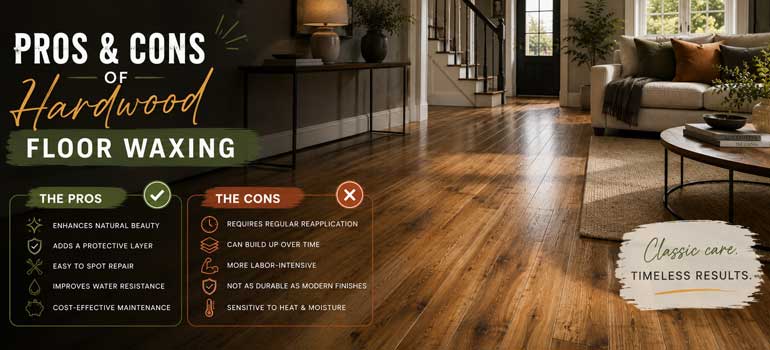
The pros of a waxed floor
- A warm, natural sheen. Wax brings out the depth and colour of the wood grain without the higher gloss of a lacquer, which suits period parquet and character floors particularly well.
- Easy small-scale touch-ups. Light scratches and worn patches can often be buffed or spot-treated without stripping and redoing the whole floor, which isn't always possible with lacquer.
- Traditional and often low-VOC. Many wax products are made from natural ingredients like beeswax or carnauba wax, which appeals to anyone prioritising a more natural finish. It's worth checking the specific product's ingredients rather than assuming, since not every wax on the market is marketed this way.
- Suits certain wood species well. Some timbers, including pine and other resin-producing softwoods, take a wax finish particularly nicely.
The cons of a waxed floor
- The weakest water resistance of the common finishes. Wax is more prone to water marks and staining than both oil and lacquer, so it's not a good fit for kitchens, bathrooms or anywhere spills are frequent.
- Less durable under heavy traffic. A waxed floor generally needs reapplying more often than an oiled or lacquered one, often every six to twelve months in a busy room, compared with a year or more for oil and considerably longer for lacquer.
- Needs its own cleaning products. Ordinary household cleaners can strip a wax finish, so it needs a pH-neutral cleaner made for waxed floors, which is one more thing to keep on hand and remember to use.
- Dirt build-up over time. Wax can trap dirt in a way that's harder to remove than with a sealed lacquer surface, and a floor that hasn't been maintained well can start to look dull rather than shiny.
- Over-buffing makes it slippery. It's easy to overdo the buffing stage and end up with a surface that's noticeably slicker underfoot than intended.
Wax vs oil vs lacquer at a glance
| Wax | Oil | Lacquer | |
|---|---|---|---|
| Look | Soft, warm, matt | Natural, matt to satin | Higher sheen, film-forming |
| Water resistance | Weakest of the three | Moderate | Strongest of the three |
| Typical maintenance interval | Roughly 6 to 12 months | Roughly 1 to 3 years | Several years |
| Repairability | Easy small spot touch-ups | Easy spot repairs | Harder to spot-repair, often needs a full recoat |
| Best suited to | Period and character floors, low-traffic rooms | Living rooms, bedrooms, most general rooms | Hallways, kitchens, high-traffic and commercial spaces |
How to re-wax a floor
- Confirm what's already on the floor. If you're not sure whether an existing floor is waxed, wipe a small area with a damp cloth. A grey residue on the cloth is a fairly reliable sign of wax.
- Strip the old wax completely using a proper wax-stripping product rather than sanding it off, following the manufacturer's instructions closely. Removing old wax by sanding isn't the right method and can damage the wood underneath unnecessarily.
- Lightly sand the bare surface with a fine sandpaper to smooth out any imperfections and give the new wax something to key into.
- Apply the new wax in thin layers, usually two or more depending on the product, working it evenly across the floor.
- Buff once dry. A bit of unevenness before buffing is normal and gets smoothed out at this stage, but go easy on the buffing itself to avoid making the surface too slippery.
If a previous finish isn't recognisable or the floor's condition is uncertain, it's worth having it assessed before choosing wax over oil or lacquer, particularly for busier rooms where the maintenance difference matters most. Our parquet floor fitting team can advise on the right finish for your specific floor and traffic levels, and we also handle commercial parquet floor fitting where finish choice matters even more given the footfall involved. Get in touch for a free quote whenever you're ready.
Frequently asked questions
Is wax a good choice for a kitchen floor? Not generally. Wax has the weakest water resistance of the common finishes, and kitchens see frequent spills and moisture, so oil or lacquer is usually the better fit there.
Can I switch from lacquer to wax on the same floor? Not directly. The lacquer film needs to be fully sanded off down to bare wood first, since wax won't bond properly over a sealed lacquer surface. At that point the floor is effectively being refinished from scratch.
How often does a waxed floor need attention? It depends on traffic, but expect to reapply wax roughly every six to twelve months in a well-used room, and less often in a low-traffic space. This is noticeably more frequent than oil or lacquer typically require.
Why does my waxed floor feel slippery after cleaning? This is usually a sign of over-buffing or a wax build-up from repeated light coats without proper stripping in between. A pH-neutral cleaner made for waxed floors and a lighter buffing touch usually resolves it.
Is wax suitable for underfloor heating? Not all wax products are rated for it, unlike many engineered wood and oil finishes, so it's worth checking the specific product's guidance before choosing wax for a room with underfloor heating.