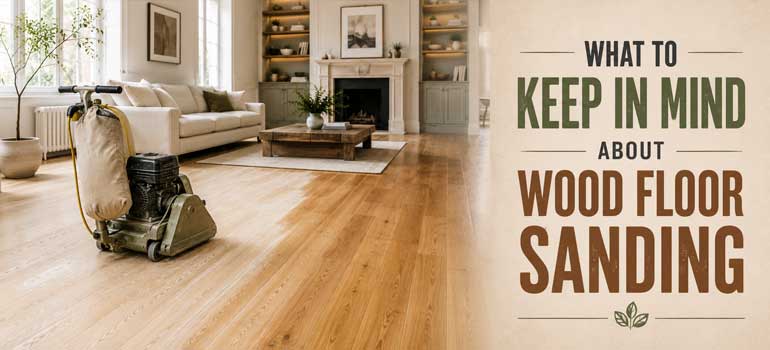
Sanding brings a tired wood floor back to something close to its original condition, but a few genuine misconceptions tend to follow the topic around. Here's what's actually worth knowing before you book the work in.
You don't have to wait until the floor looks ruined
A common assumption is that sanding is only worth considering once a floor looks genuinely worn out, but catching it earlier is the better approach. Once the protective finish wears through completely, the bare wood underneath is exposed to scratches, staining and moisture with nothing protecting it, and by that point you're dealing with actual wood damage rather than just a tired-looking surface. Watching for early signs - a duller finish, more visible scratches in high-traffic paths, water no longer beading on the surface - means the sanding work needed is often lighter than if you wait for the floor to look genuinely tired.
Sanding doesn't have to be the disruptive job you've heard about
Sanding has a reputation for being a messy, disruptive ordeal, but modern equipment has changed this considerably. A couple of things genuinely make a difference:
- Dust extraction systems built into professional sanding equipment capture the large majority of dust as it's produced, rather than leaving it to settle across the whole house
- An experienced, reliable contractor matters more than the equipment alone, since technique still affects how much mess and disruption the job actually causes
It's still a real job that takes the room out of use for a period, but it's genuinely less of an ordeal than the horror stories sometimes suggest, provided you're working with someone who does this regularly.
Water-based or oil-based topcoat: a different choice from oil vs. lacquer
This is worth clarifying, since it's easy to confuse with a different decision covered elsewhere. Choosing between a water-based and an oil-based topcoat is about the carrier used in a lacquer or varnish product, not the same as choosing between a penetrating oil finish and a lacquer finish, which our guide to oiled or lacquered floor finishes covers separately.
Within lacquer specifically, water-based and oil-based versions both exist, and it's worth knowing how they actually compare:
- Durability is now genuinely close between the two. Older assumptions that oil-based lacquer is significantly tougher have largely been closed by modern water-based formulations, which hold up comparably well in most cases
- Water-based lacquer dries faster and carries far less odour, though it's worth being accurate rather than calling it "practically harmless," since it still involves some fumes during application and benefits from proper ventilation like any finishing product
- Oil-based lacquer tends to amber slightly with age, which water-based formulations largely avoid, making water-based the more reliable choice if you want the wood's colour to stay true over time
Why this is still worth leaving to a professional
Even with better equipment and less mess than the horror stories suggest, wood floor sanding remains a job where experience genuinely shows in the final result. Uneven sanding can leave visible dips, missed spots, or damage to a floor's veneer if it's engineered wood with a limited wear layer, mistakes that are far more costly to fix than the job would have cost to do the first time properly. A professional brings the right equipment, technique and product knowledge together, which matters more here than in most routine maintenance tasks.
Cleaning still matters afterwards
A freshly sanded and finished floor looks genuinely new, but keeping it that way still comes down to the same regular cleaning routine as before, rather than anything special. Our guide to parquet wood floor cleaning covers the routine worth sticking to, and our guide to the main parquet flooring issues is worth a read if you'd like to catch the next round of wear early rather than waiting for it to become obvious.
If your floor is showing early signs of wear, our parquet floor fitting team can assess whether sanding is worth doing now versus waiting. Get in touch for a free quote whenever you're ready.
Frequently asked questions
How do I know if my floor needs sanding versus just a re-oil or recoat? If the wood itself is exposed, showing bare patches, deep scratches or staining, sanding is generally necessary, since a re-oil or recoat only tops up an existing finish rather than repairing damaged wood. If the finish is simply dull but intact, a lighter maintenance option may be enough.
Does engineered wood limit how many times a floor can be sanded? Yes, since engineered boards have a finite hardwood wear layer, unlike solid wood which can typically be sanded many more times over its life. It's worth knowing your floor's wear layer thickness before assuming unlimited future sanding is an option.
Is water-based lacquer more expensive than oil-based? It can be, though the price gap has narrowed as water-based products have become more mainstream. The faster drying time and lower odour often make up for any difference in material cost through reduced disruption during the job.
How long does a room need to stay empty after sanding and refinishing? This varies by product and number of coats, but expect the room to be unusable for several days at minimum, sometimes longer for oil-based products given their slower drying time. Your contractor should give you a specific timeline based on the exact products used.
Can I sand just one room, or does it need to match the rest of the house? You can sand a single room, though it's worth considering whether the finish will visibly differ from adjoining connected spaces afterward. Matching the existing finish as closely as possible avoids an obvious seam where the newly sanded area meets the rest of the floor.