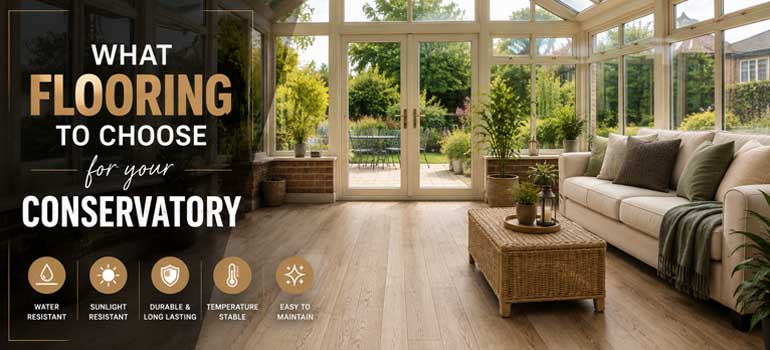
A conservatory is one of the most demanding rooms in a house when it comes to flooring, mostly because of what makes it appealing in the first place. All that glass floods the room with natural light and lets you enjoy the garden year-round, but it also means a conservatory swings between far hotter and far colder than the rest of the house, often within the same day, and takes direct sun exposure that most other rooms never see. Wood flooring can absolutely work here, but which type of wood matters more in a conservatory than almost anywhere else in the home.
Why conservatories are hard on flooring
Three things make a conservatory a tougher environment than a typical room:
- Bigger temperature swings. Glass conservatories heat up quickly in direct sun and cool down just as fast overnight, often with a wider daily range than an insulated room experiences.
- More UV exposure. Extended direct sunlight fades and bleaches most flooring surfaces over time, wood included, faster than in a room with normal window coverage.
- Higher humidity variation. Proximity to the garden and, in older or less insulated conservatories, more moisture getting in around doors and glazing.
Wood is naturally sensitive to all three of these, which is exactly why the choice between solid and engineered wood matters so much more here than it would in, say, a bedroom.
Is solid wood a good choice for a conservatory?
Generally, no, and it's worth being upfront about that rather than glossing over it. Solid wood is cut entirely from hardwood, which makes it more reactive to temperature and humidity swings than engineered wood. In a room with the daily extremes a conservatory can see, that reactivity shows up as warping, cupping or cracking over time, on top of the fading that direct sun causes regardless of which wood type you choose. If you'd like to understand why wood moves with temperature and humidity in more detail, our guide on why wood floors expand and contract with the seasons covers the mechanics.
Why engineered wood works better here
Engineered wood is built from cross-layered plies under a hardwood veneer, which makes it considerably more dimensionally stable through the kind of daily extremes a conservatory produces. It still moves to some degree, since the top layer is genuine wood, but it holds its shape far better than solid wood through the same conditions. Pairing it with a UV-protective finish is worth prioritising too, since that specifically slows the colour fading that comes from direct, sustained sunlight, which a standard finish doesn't guard against as effectively.
Choosing your wood species and finish
Colour choice comes down to personal taste, but there are a couple of practical things worth factoring in alongside it. Lighter species like oak, ash or light-toned birch make a conservatory feel airier and more open, and they tend to show less visible contrast as they fade slightly over time compared with darker woods, where sun-bleached patches near windows can stand out more obviously against furniture or rugs. If you'd rather go darker, cherry and other richer tones still work well, just be more diligent about UV-protective finishing and consider blinds or curtains to manage the most direct sun exposure through the day.
Other things worth getting right
- Ventilate the room regularly, particularly in summer, to keep humidity from building up excessively on hot days.
- Add blinds or curtains to cut down on the harshest direct sunlight, which protects both the floor's colour and your furniture.
- Leave proper expansion gaps around the room's perimeter when the floor is fitted, since a conservatory needs more room to move than a typical interior room.
- Use a doormat at any garden-facing doors to catch moisture and grit before it reaches the floor.
- Avoid extreme heating swings, such as leaving a conservatory unheated all winter and then blasting it warm for occasional use, since gradual, consistent conditions are far kinder to any wood floor than sharp swings.
If you're planning a conservatory floor and want advice specific to how much sun and glazing your room gets, our parquet floor fitting team can talk through what's realistic for the space before you commit to a species or finish. You can also read our guide to engineered wood fishbone parquet flooring if a patterned floor is part of what you're considering, and get in touch for a free quote whenever you're ready.
Frequently asked questions
Can I use solid wood in a conservatory if I'm careful with humidity control? It's possible with very consistent heating, ventilation and shading, but it's still a higher-risk choice than engineered wood for the same room, since a single hot summer or a heating system that isn't as reliable as planned can undo careful maintenance. Engineered wood gives you a much bigger margin for error.
Will my conservatory floor definitely fade over time? Some colour change from UV exposure is very likely over the years regardless of wood type, though a UV-protective finish and window coverings both slow it down considerably. Rotating rugs or furniture occasionally also helps prevent obviously uneven fading in specific patches.
Is underfloor heating a good idea in a conservatory with wood flooring? It can work well with engineered wood specifically, using the glue-down fitting method, though it adds another factor to manage alongside the room's natural temperature swings. It's best discussed with a fitter who can look at your specific glazing and heating setup.
Should I avoid wood flooring in a conservatory altogether? Not necessarily. Engineered wood with a UV-protective finish performs well in most UK conservatories when it's properly ventilated and shaded from the harshest sun. It's really solid wood specifically that carries the higher risk in this particular room.
Does the direction my conservatory faces matter for flooring choice? Yes, a south-facing conservatory with long hours of direct sun will test a floor's UV resistance far more than one that's shaded for part of the day, so it's worth factoring your conservatory's orientation into both the finish you choose and how much you rely on blinds or curtains.