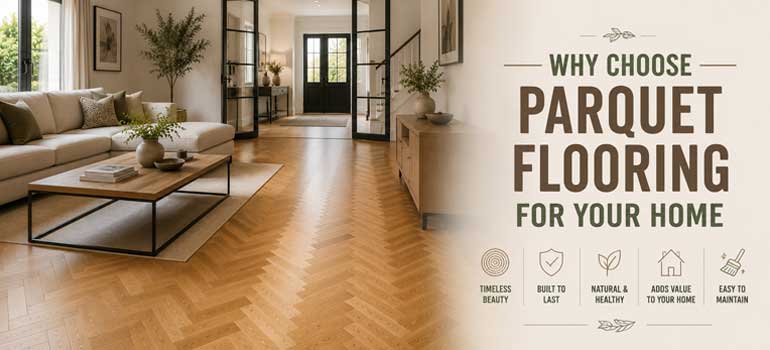
Parquet brings centuries of history and a distinctive look to a home, but it's worth going beyond the usual "timeless and durable" pitch to what actually makes it feel different day to day. Two things stand out in particular: how it feels underfoot, and just how much room it gives you to make it your own.
Why parquet actually feels warmer underfoot
This is a real, physical property, not just a marketing line. Wood is a natural insulator, which means it doesn't pull heat away from bare feet the way a cold tile or stone floor does, so it feels noticeably warmer to the touch even without any heating system involved. That's a different mechanism from underfloor heating efficiency specifically, where wood's insulating properties actually work against it rather than for it, but for everyday ambient comfort, walking across a wood floor on a cold morning, it's a genuine advantage over hard, cold surfaces like tile or stone.
- A good underlay adds further comfort and a bit of extra insulation, worth considering alongside the floor itself
- Keeping gaps and joints well maintained helps preserve that warm, solid underfoot feel over the years, rather than letting draughts and cold spots develop through neglected gaps
Why parquet is so versatile
This is where parquet actually separates itself from most other flooring choices. Between wood species, pattern and finish, the range of looks achievable is considerably wider than most people expect going in.
- Species alone gives you a huge colour range, from pale ash and oak through to deep walnut or wenge, each with its own natural grain character
- Pattern adds a second layer of choice, herringbone, chevron, basketweave, brick bond and more, each changing how the same species reads in a room
- Finish and stain open things up further, letting you push a natural tone lighter, darker, or into an entirely different colour altogether
Our guides to ash, cherry, walnut, maple and oak flooring and wood flooring patterns cover the full range if you'd like to see how much choice is actually on the table.
Durability, hygiene and long-term value
These points are covered in full in our guide to the benefits of having a real wood floor, but the short version: parquet can last decades, sometimes a century or more with proper care, and unlike carpet, it can be sanded and refinished rather than replaced once it starts showing wear. It's also a strong choice for allergy-prone households, since a hard surface doesn't trap dust and allergens the way carpet fibres do.
One claim worth being accurate about: parquet doesn't "always" increase a property's value. It's a feature buyers generally respond well to and rarely see as a downside, which does tend to help a property show and sell well, but it's not a guaranteed fixed uplift, and the effect varies by property type and local market. It's a good long-term investment in most cases, just not an automatic one.
Sustainability
Because it can be sanded and refinished multiple times rather than replaced, parquet has a properly long useful life compared with synthetic flooring options that end up in landfill sooner. Choosing timber from a responsibly managed source, look for certification like FSC, adds to that further, since wood is a renewable material in a way most manufactured flooring simply isn't.
If you'd like to see the full range of species, patterns and finishes available for your home, our parquet floor fitting team can talk you through it. Get in touch for a free quote whenever you're ready.
Frequently asked questions
Does parquet feel as warm as carpet underfoot? Not quite, since carpet's soft fibres trap air even more effectively than wood does, but parquet is noticeably warmer than tile or stone. Pairing it with underfloor heating or a rug in key spots closes most of the remaining gap.
How much does pattern choice actually affect the final cost? It varies considerably, since simpler patterns like brick bond cost less to produce and fit than more complex ones like herringbone or chevron. It's worth deciding on a rough budget before falling in love with a specific pattern.
Is it worth paying more for a rarer wood species for the versatility alone? Not necessarily, since more common species like oak already offer a wide colour and finish range through staining. A rarer or exotic species is worth the premium mainly if its specific natural colour or grain is what you're actually after.
Does parquet's resale value benefit depend on the pattern or species chosen? It can, since a well-executed, versatile choice like oak in a classic pattern tends to appeal to the widest range of buyers. A very bold or unusual combination might be loved by some buyers and less so by others, which is worth bearing in mind if resale is a genuine priority.
Is sustainable parquet harder to find or more expensive? Not particularly, since FSC certification and similar standards are increasingly common among reputable suppliers rather than a rare premium option. It's worth asking directly rather than assuming sustainable sourcing adds significant cost.