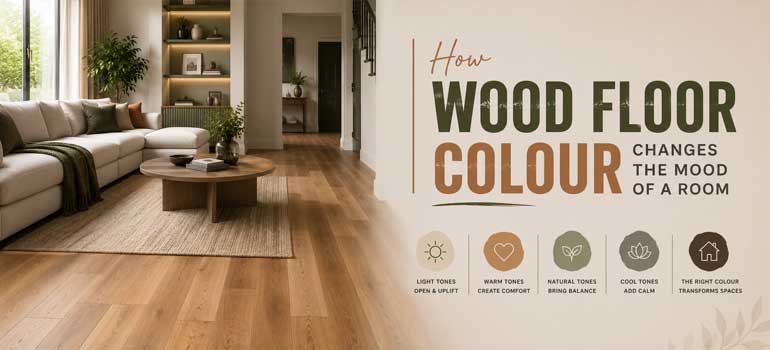
Wood flooring does more than sit underfoot. The colour you choose changes how a room actually feels to be in, sometimes just as much as paint or furniture does, and it's worth thinking through deliberately rather than picking on looks alone. Here's how the main tonal families affect a room's atmosphere, and a few practical trade-offs worth knowing before you commit to a shade.
Dark brown: versatile and dramatic
Dark brown is the most adaptable shade going, working comfortably across almost any interior style. It reads as elegant and grounded, and it suits spaces meant to feel serious or considered: home offices, libraries, and studies all benefit from the weight a dark floor brings to a room. Paired with a bold grain, like oak or walnut, it adds real character rather than just darkness for its own sake.
Light browns and golds: warm and inviting
Warmer, honey-toned browns and golds create a relaxed, welcoming atmosphere, which is why they work so well in living rooms, lounges and bedrooms, the rooms where you actually want to unwind. Pairing a warm tone with a rustic grain, visible knots and natural character, leans into a cosy, lived-in European feel rather than a polished showroom look.
Reddish tones: traditional with a hint of drama
Reddish-brown shades strike a balance between cosy and characterful, which suits kitchens and bedrooms particularly well: warm enough to feel welcoming, with enough depth to avoid feeling flat. Cherry is the obvious species here, though a red-toned oak stain achieves a similar effect at a different price point.
Yellow and pale tones: bright and spacious
Yellow-toned wood brings genuine brightness and energy to a room, while the palest shades, white, grey-washed or bleached tones, do the most to make a small space feel open and airy. Ash and light oak both lean naturally in this direction without any staining needed.
Choosing a shade by room
| Room | Suits | Why |
|---|---|---|
| Home office or library | Dark brown | Grounded, serious, focused atmosphere |
| Living room or lounge | Light brown or gold | Warm, relaxed, inviting |
| Kitchen or bedroom | Reddish tones | Traditional with a touch of character |
| Any room | Yellow or pale tones | Bright, spacious feel |
| Small rooms specifically | Pale, white or grey | Maximises the sense of space |
One practical trade-off worth knowing
Colour isn't just an aesthetic decision, since it affects how much maintenance you notice day to day. Darker floors tend to show dust, pet hair and light scratches more readily, since the contrast against a dark surface makes them stand out. Lighter floors hide that kind of everyday mess better, but show water marks and stains more obviously. Neither is a wrong choice, but it's worth factoring your household's daily reality into the decision alongside the mood you're going for.
If you'd like to see how specific species tend to lean tonally, our guide to ash, cherry, walnut, maple and oak flooring covers the natural colour range of five popular options, and our piece on oak vs walnut goes deeper into two of the most requested tones specifically. Our parquet floor fitting team can talk through species, stain and finish options for the mood you're after, and we're happy to put together a free quote once you've got a direction in mind.
Frequently asked questions
Can I change my wood floor's colour without replacing it? Yes, if it's solid wood or engineered wood with a thick enough wear layer, it can be sanded back and refinished to a different shade. This is a genuine way to change a room's mood years after the original installation without a full replacement.
Does floor colour actually affect how big a room feels, or is that just a myth? It's a real effect, not just a myth. Pale floors reflect more light and reduce visual contrast with pale walls, which genuinely makes a room read as more open, while dark floors add visual weight that can make a large room feel more intimate and a small one feel more closed in.
Should my floor match or contrast with my furniture? Both approaches work, and it comes down to preference. A close match creates a calm, cohesive look, while a deliberate contrast, a light floor with dark furniture or vice versa, adds definition and visual interest to a room.
Is a dark floor a bad choice if I have pets? Not necessarily, but it's worth knowing dark floors show pet hair, dust and light scratches more readily than mid-tone or pale floors. A textured or wire-brushed finish helps disguise both scratches and hair better than a smooth, glossy dark surface.
Do trends in wood floor colour change over time? Yes, tonal preferences shift over the years the way most interior trends do, though wood flooring generally ages better than other finishes because even an unfashionable tone can be resanded and restained later. That's part of what makes it a longer-term investment than flooring options that can't be refinished.