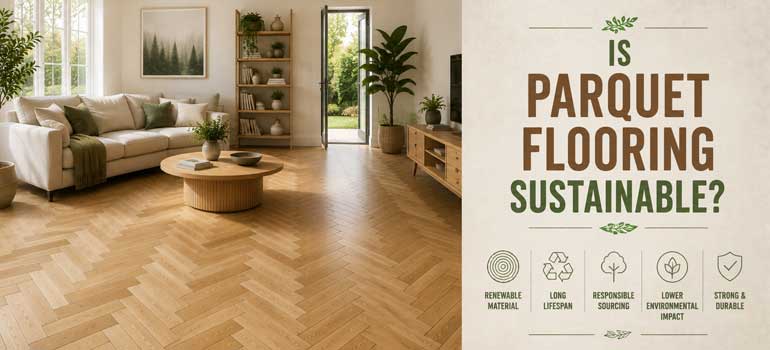
Parquet has real sustainability credentials worth taking seriously, but it's worth being accurate about where those credentials actually come from rather than treating "real wood" as automatically eco-friendly regardless of where it's sourced from.
What does sustainable flooring actually mean?
In simple terms, sustainable flooring is a product that meets your practical needs without compromising the resources or environment future generations will depend on. For wood flooring specifically, that comes down to two main things: whether the timber is sourced from responsibly managed, renewing forests, and how much environmental impact, energy use, chemicals, waste, and the manufacturing process itself involve.
Is parquet actually sustainable, or does it depend?
This is worth answering honestly rather than with a blanket "yes." Parquet has the genuine potential to be one of the more sustainable flooring choices available, but that potential is entirely dependent on how and where the specific wood was sourced, not a property of parquet as a category. Wood from a poorly managed or illegally logged source isn't sustainable just because it happens to be real timber, and a supplier without proper certification offers no real assurance either way.
What actually makes a specific parquet floor sustainable:
- Certification from a recognised body, such as FSC or PEFC, confirming the timber came from a responsibly managed, renewing forest
- A manufacturer that's transparent about sourcing, able to tell you where the wood came from and how it was processed
- Reasonable transport distance, since shipping timber long distances adds to its overall carbon footprint regardless of how well the forest itself was managed
- How the board is constructed, since engineered wood involves adhesives and resins in its plywood core, worth asking about if chemical content specifically matters to you, whereas solid wood doesn't carry that consideration
Buying parquet without checking any of this doesn't guarantee an unsustainable floor, but it doesn't guarantee a sustainable one either. It's down to the specific supplier and product, which is exactly why doing a bit of research before buying matters more than assuming real wood is automatically the responsible choice.
The genuine sustainability advantage: refinishing instead of replacing
This is where parquet's real, well-established advantage lies. Because it can be sanded and refinished repeatedly rather than torn out and replaced, a well-maintained parquet floor can last decades, sometimes a century or more, considerably longer than laminate, vinyl or carpet, which typically need full replacement every ten to fifteen years. That longevity means less material ending up in landfill over the life of the property, which is a genuine, measurable environmental advantage regardless of any specific sourcing certification. Our guide to the benefits of having a real wood floor covers this longevity advantage in more detail.
If sustainable sourcing matters to your project, our parquet floor fitting team can talk you through certified options and where the wood we use actually comes from. Get in touch for a free quote whenever you're ready.
Frequently asked questions
Is FSC certification the only sustainability standard worth looking for? It's the most widely recognised, but PEFC certification is another credible standard covering responsibly managed forests. Either is a reasonable indicator that the timber's sourcing has been independently checked, rather than just taking a supplier's word for it.
Is engineered wood less sustainable than solid wood because of the adhesives used? Not necessarily, since engineered construction also uses less of the slower-growing hardwood per board, stretching a limited resource further. It's a genuine trade-off worth weighing rather than an automatic point against engineered wood.
Does buying reclaimed parquet count as more sustainable than new, certified wood? Generally yes, since reclaimed timber reuses existing material rather than requiring new trees to be felled at all. It's worth checking the reclaimed source is legitimate, though, since not every product marketed as reclaimed actually is.
How can I check if a supplier's sustainability claims are genuine? Ask for the actual certification documentation rather than accepting a general claim of being "eco-friendly," since that phrase alone isn't independently verified. A reputable supplier should be able to provide this without hesitation.
Does refinishing a parquet floor have any environmental downside? Sanding and refinishing do produce some dust and use finishing products, but the impact is minor compared with manufacturing and disposing of an entirely new floor. It remains the more sustainable option overall compared with replacement.