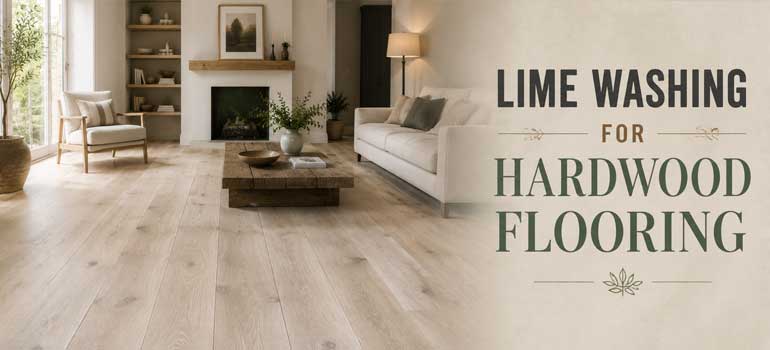
Lime washing is one of those flooring terms that gets used loosely, sometimes referring to a genuinely traditional technique and sometimes to something closer to a diluted paint finish. It's worth untangling the terminology before deciding whether it's right for your floor.
What lime washing actually is
The traditional technique uses a mixture based on calcium hydroxide, historically combined with chalk, to lighten and protect timber. That's genuine lime washing in the original sense. A few related but distinct terms have since gathered under the same loose umbrella:
- True lime wash uses an actual lime-based mixture, historically valued for both its bleaching effect and its natural protective properties
- Liming wax is a modern, lime-based wax product worked into the open grain of the wood, giving a similar pale, textured look while doubling as part of the finish itself
- A diluted paint or pickling stain is what most commercially available "lime washing" products actually are today, using a heavily thinned white or pale paint rather than genuine lime, applied to achieve a visually similar bleached effect
All three deliver a broadly similar look, a lightened, weathered appearance that lets the grain show through, but it's worth asking a supplier specifically which technique their product uses, since the application process and long-term behaviour differ between them.
The effect and where it works well
Whichever method is used, the result brightens the wood and gives it a soft, weathered character that suits pale, neutral colour schemes particularly well, whites, creams and natural tones especially. It's a look that works in most rooms, though as with any pale finish, direction and lighting do more to affect how spacious a room feels than the lime-washed effect alone.
Is this actually a realistic DIY project?
This is worth being honest about, since it's often presented as simpler than it really is. Getting an even, streak-free result across an entire floor is genuinely difficult without experience, even though the individual steps sound straightforward.
- Strip the floor back to completely bare wood first, since any existing finish will stop the wash from taking evenly, the same requirement that applies to any staining or pickling work on wood flooring
- Clean thoroughly, removing all dust and debris, since anything left on the surface can scratch bare wood or create an uneven patch once the wash goes on
- Apply the wash evenly across the whole floor, working in manageable sections with a suitable applicator, since inconsistent coverage is the most common way a DIY attempt goes visibly wrong
- Allow proper drying time before sealing, generally at least a full day
If you're using an oil-based product for the wash itself, proper ventilation matters throughout, and it's worth testing on an inconspicuous patch first regardless of experience level, since wood species and grain vary enough that the same product can look noticeably different from one floor to the next. Our guide to parquet floor re-oiling and staining covers the same bare-wood requirement in more detail if you'd like the fuller picture on staining generally.
Sealing the finish without yellowing it
This step matters more than the original wash itself for how the finish looks in a few years. A water-based topcoat is the more reliable choice for sealing a lime-washed floor, since oil-based polyurethane naturally ambers with age, and that shift is far more visible against a pale, lime-washed surface than it would be on a mid-brown or dark floor. Our guide to white-shaded wood floors covers this yellowing issue in more depth, since it affects any pale wood finish, not just lime washing specifically.
If lime washing sounds like the direction you want for your floor, our parquet floor fitting team can advise on which technique suits your wood and help achieve an even result across the whole floor. Get in touch for a free quote whenever you're ready.
Frequently asked questions
Is liming wax more durable than a diluted paint lime wash? It depends on the specific products being compared, but liming wax generally needs the same kind of regular maintenance any waxed floor does, while a painted pickling stain relies entirely on its topcoat for protection. Neither is inherently more durable across the board.
Can lime washing be reversed if I change my mind later? Yes, provided there's enough wood left in the wear layer to sand back to bare timber and refinish differently. It's the same process as changing any other stain or finish, just starting from a lime-washed surface instead.
Does lime washing work on all wood species equally well? Open-grained species like oak and ash tend to take it most naturally, since the pigment settles into the grain and lets the wood's character show through. Tighter-grained species can still be lime-washed, but the effect and the technique used may need adjusting.
Will my lime-washed floor look exactly like the sample I was shown? Not necessarily exactly, since natural variation in the wood itself affects how any pale finish takes across different boards. It's worth seeing a sample on the actual species you're using rather than assuming it will match a generic photo precisely.
How often does a lime-washed floor need maintenance? This depends on which technique was used and the topcoat applied over it, so it's worth asking your supplier or fitter directly. A properly sealed, water-based topcoat generally needs the same routine care as any other sealed wood floor.