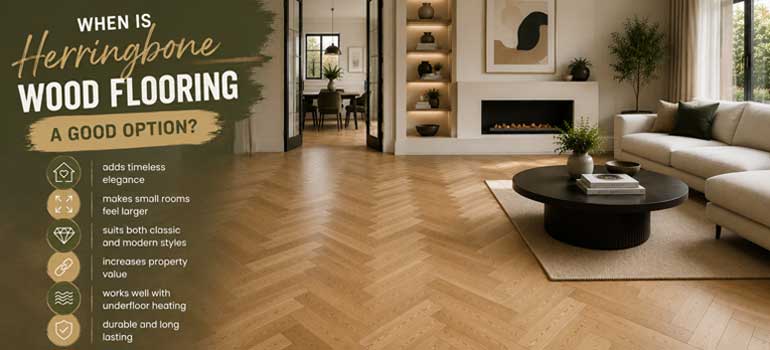
Herringbone has centuries of history behind it, and it's stayed popular for a reason: few patterns bring the same sense of movement and craftsmanship to a floor. But "does it look good" isn't really the question most people are actually weighing up. It's whether it makes sense for their specific room, budget and situation. Here's when it genuinely does, and where a couple of common myths about it don't hold up.
When you're working with a tricky or existing subfloor
Engineered herringbone is considerably more forgiving here than solid wood ever was.
- Uneven or unlevelled subfloors are more manageable with engineered boards, which handle minor imperfections better than rigid solid parquet blocks
- Fitting over an existing floor is often possible with engineered wood, avoiding a full rip-out in some renovation projects
- Concrete subfloors with moisture present are a better fit for engineered construction, which resists the movement that solid wood struggles with in these conditions
If your subfloor isn't in perfect original condition, that's a genuine reason to lean toward engineered herringbone rather than a reason to avoid the pattern altogether.
When budget is a real constraint
Herringbone doesn't have to mean the expense of traditional hand-laid solid parquet.
- Engineered herringbone arrives pre-cut and pre-assembled, cutting out much of the skilled hand-fitting that made the pattern expensive in the past
- Installation time is considerably shorter than hand-laid solid parquet, which reduces labour cost alongside material cost
- A factory-applied finish is already durable and complete on arrival, avoiding the extra cost of on-site finishing
It's still generally pricier than a simple straight-laid floor, given the pattern's complexity, but it's far more accessible than it used to be.
When the room sees humidity or temperature swings
This is worth being precise about, since it's easy to overstate. Engineered herringbone is more dimensionally stable through humidity changes than solid wood, but it isn't simply "moisture resistant."
- Engineered construction resists warping and gapping better than solid wood in rooms with bigger seasonal swings
- It's still real wood on the surface, so standing water and excess moisture remain a genuine risk regardless of construction
- Kitchens and hallways near a front door are good examples of where engineered herringbone's added stability matters more than in a stable, low-traffic room
Our guide to why wood floors expand and contract with the seasons covers the mechanics behind this in more depth.
When you're not sure the room is "big enough"
This is the myth worth debunking directly. Herringbone doesn't need a large room to work, and a smaller block size or pale wood tone often suits a compact space particularly well.
- Pattern direction matters more than room size, since laying herringbone down the length of a room emphasises depth rather than shrinking the space
- Block scale is the real variable, not the square footage of the room, a large block can feel busy in a small room regardless of the pattern
- Hallways and smaller rooms are actually common, effective places for herringbone, not spaces to avoid it
Our guide to the herringbone wood floor pattern goes further into styling and block size guidance for different room sizes.
When you want a pattern that suits any interior style
Herringbone is genuinely one of the more versatile pattern choices available.
- Traditional and period interiors suit herringbone naturally, given its long design history
- Modern and industrial spaces work just as well with the right wood tone and finish, since the geometry itself reads as contemporary too
- Colour and finish do most of the styling work, so the same pattern can look completely different depending on whether it's paired with a pale oiled oak or a dark, glossy walnut
If herringbone sounds right for your project, our parquet floor fitting team can advise on solid versus engineered construction, budget and layout for your specific room. Get in touch for a free quote whenever you're ready.
Frequently asked questions
Is herringbone ever the wrong choice for a room? It's less about the room and more about matching the construction to the conditions. A room with heavy moisture exposure and a tight budget for engineered wood specifically might be better suited to a simpler, more affordable flooring option, but the pattern itself rarely rules a room out on its own.
Does engineered herringbone look different from solid herringbone once fitted? No, they look identical once installed and finished. The difference is entirely in the construction underneath, not the visible surface.
Is herringbone a good option for a rental property or short-term ownership? It's worth weighing the upfront cost against how long you'll be in the property, since herringbone typically costs more than a simple straight-laid floor. That said, it's also a strong selling point if you plan to sell, since patterned wood flooring is generally well received by buyers.
Can herringbone be fitted over underfloor heating? Yes, with engineered wood and the glue-down fitting method specifically, following the same general guidance that applies to underfloor heating with any wood floor. Solid wood herringbone isn't recommended over underfloor heating.
How do I know if my subfloor is suitable for herringbone without paying for a full assessment? A basic visual check for obvious unevenness, damp patches or an unstable surface can flag major issues, but a proper moisture and levelness check by a professional is the only reliable way to know for certain before committing to a pattern this precise.