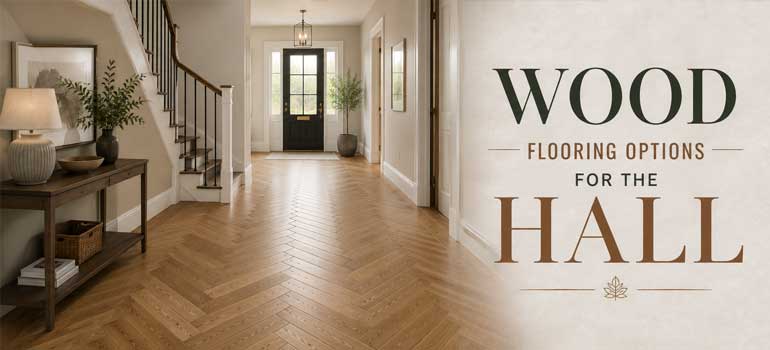
A hallway does more work than most rooms in the house. It's the first thing anyone sees when they walk through the door, and it takes some of the heaviest daily traffic of any room, muddy shoes, dragged bags, constant footfall, often all at once. Getting the finish, protection and colour right matters more here than almost anywhere else, so here's how to actually choose well.
Choosing the finish: lacquer or oil
Given the traffic a hallway sees, both lacquer and oil are genuinely durable options, but they suit slightly different priorities.
- Lacquer forms a hard, sealed film on top of the wood, taking the brunt of daily wear on that surface rather than the timber underneath, and it typically goes considerably longer between recoats than oil
- Oil penetrates the wood itself, protecting from within, and while it needs more frequent maintenance than lacquer, it's easier to spot-repair a worn patch near the front door without redoing the whole floor
- Either works well in a hallway specifically, so the choice often comes down to how much maintenance frequency you're comfortable with rather than one being clearly better
Our guide to oiled or lacquered floor finishes covers this comparison in full detail if you'd like to weigh it up further.
Why UV protection matters here specifically
Hallways often sit near a front door with glazing, or under a window that gets direct sun for part of the day, which makes UV exposure a genuine concern. A finish without UV protection can fade and discolour noticeably faster in a sun-exposed hallway than it would in a more shielded room, so it's worth prioritising a UV-protective lacquer or oil here even if you wouldn't bother in a lower-light room elsewhere in the house.
Colour: a more nuanced choice than "always go light"
It's often said that dark colours and bold patterns should be avoided in small, narrow hallways, but that's an oversimplification worth correcting. Direction and lighting genuinely do more to affect how a hallway feels than colour alone.
- Pattern direction matters more than colour. A pattern like herringbone laid lengthwise down a narrow hallway draws the eye forward and emphasises depth, which often works better in a tight space than avoiding pattern altogether
- Good lighting does real work regardless of floor colour, so a well-lit narrow hallway can carry a darker floor without feeling cramped
- Practically speaking, darker floors do hide scuffs and dust better in a room that takes this much daily traffic, which is a genuine reason to consider one beyond aesthetics alone
Our guide to parquet flooring for hallways goes further into pattern, species and colour choices specifically for this room, and our guide to how wood floor colour changes the mood of a room covers the broader relationship between colour, light and perceived space.
If you'd like advice tailored to your specific hallway's size, light and traffic levels, our parquet floor fitting team can help. Get in touch for a free quote whenever you're ready.
Frequently asked questions
Is oil or lacquer more resistant to the grit tracked in from outside? Both handle typical grit reasonably well, though the key protection against grit-related scratching is a doormat inside and outside the entrance, not the finish type itself. Grit dragged underfoot is what actually causes most scratching, regardless of which finish you choose.
How often does a hallway floor's finish need attention compared with a lower-traffic room? Noticeably more often, given the volume of daily footfall. Oil finishes in particular may need re-oiling closer to the one-year end of the typical range in a busy hallway rather than the two-to-three-year range that suits a quieter room.
Does a dark hallway floor really hide dirt better, or is that just a common claim? It's genuinely true to an extent, since dark floors show less contrast against everyday dust and scuffs than pale floors do. The trade-off is that dark floors show water marks and light-coloured debris a little more clearly in return.
Is a UV-protective finish worth it if my hallway has no windows? It matters less in that specific case, though it's still worth checking whether light reaches the hallway through glazed doors or borrowed light from adjoining rooms. If there's genuinely minimal light exposure, UV protection becomes a lower priority than it would be in a sun-exposed hallway.
Should hallway flooring match the rest of the ground floor? It doesn't have to, but keeping a similar wood tone creates a smoother visual flow, especially where the hallway opens directly into another room. A hallway is also a reasonable place to use a slightly harder-wearing species or finish than an adjoining living room, even if the tone is closely matched.