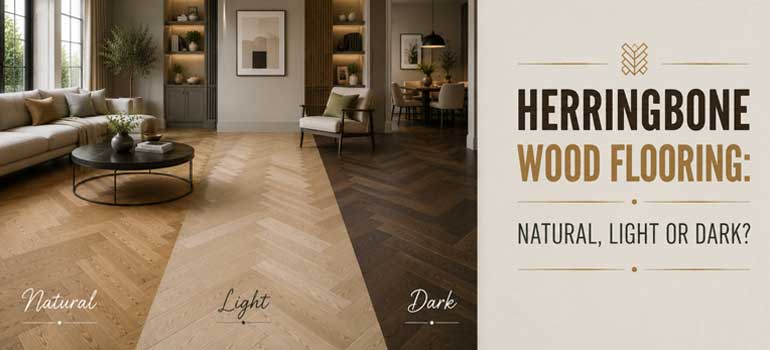
Herringbone is genuinely one of the most striking flooring options available, but getting the colour and finish right matters just as much as the pattern itself, since the wrong combination in the wrong room can tip from striking into overwhelming. Here's a proper look at the main finish options and where each one genuinely works best.
Engineered herringbone: easier to fit, not effortless
Engineered wood herringbone has made the pattern considerably more accessible than the fully hand-laid solid wood installations of the past, arriving with the design already accounted for rather than requiring piece-by-piece cutting and fitting on-site. It's worth being accurate about what that actually means, though: easier doesn't mean it needs no skill at all. The pattern still demands precise layout and alignment to look right, engineered construction or not, so it's still worth having an experienced fitter handle it rather than assuming any installer can achieve a clean result without genuine care.
The main finish and colour options
| Finish | Look | Best suited to |
|---|---|---|
| UV lacquered | Durable, protected, resists fading | High-traffic hallways and lounges, paired with a genuinely hard-wearing species |
| Brushed and unfinished | Textured, completely open to your own colour choice | Anyone wanting full control over the final stain and finish |
| Coffee brushed | Warm, elegant, old-world character | Dining rooms and bedrooms particularly |
| Smoked brushed (dark) | Dramatic, luxurious depth | Rooms wanting a genuine statement |
| Smoked brushed (light) | Airy, spacious feel | Rooms wanting brightness without losing the smoked texture |
| Brushed and UV oiled | Natural, slightly rough, authentic wood texture | Traditional, vintage, country or French provincial-inspired interiors |
A couple of these are worth a closer look:
UV lacquer is the durability-focused option, with an added UV filter that resists fading from sunlight alongside the finish's general hard-wearing qualities. It's a strong choice for hallways and other high-traffic spots, though it's worth pairing this finish with a genuinely hard species like oak for a busy room specifically, since a softer species will still show wear sooner regardless of how tough the finish itself is. Our guide to oak vs walnut covers this hardness difference if you're weighing up species for a busy room.
Smoked oak doesn't automatically mean dark. Both dark and light smoked variants exist, and they deliver genuinely different effects: dark smoked brings drama and a sense of luxury, while light smoked keeps the same textured, characterful surface but reads as considerably more open and airy. It's worth seeing both in person before assuming "smoked" means one specific look.
Brushed and unfinished is the most flexible option by far, since it hands you complete control over the eventual colour and finish rather than locking you into a factory choice. It's also the most involved route, requiring on-site sanding and finishing after fitting rather than arriving ready to use.
If you'd like to see samples across these finishes or talk through which suits your room's traffic and style, our parquet floor fitting team can help. Our guide to herringbone wood flooring grade and colour covers grade selection alongside colour if you'd like the fuller picture. Get in touch for a free quote whenever you're ready.
Frequently asked questions
Is UV lacquer the only finish suitable for a busy hallway? No, but it's a genuinely strong option given its durability and fade resistance. A well-maintained oil finish can also work in a busy hallway, though it typically needs more frequent maintenance than lacquer does.
Does coffee brushed mean the floor is actually stained with coffee? No, it's simply a descriptive name for a particular warm, brushed brown tone and texture, not a literal reference to the staining material used. The name describes the resulting colour and character rather than the process.
Can I switch from a light smoked finish to a dark one later without replacing the floor? Only if there's enough solid wood or engineered wear layer left to sand back to bare timber first, since smoking and finishing happen before the protective topcoat goes on. It's a bigger job than a simple recoat, closer to a full refinish.
Is brushed and unfinished herringbone a good choice for a first-time DIY project? Not really, given how much precision herringbone demands even before finishing enters the picture. If DIY is the goal, a pre-finished engineered option removes at least the on-site finishing step from an already demanding project.
Does the texture from brushing wear off over time? The brushed texture is worked into the wood itself during manufacturing, so it doesn't wear away the way a surface-level effect might. It can be refreshed if the floor is ever sanded and refinished down the line.